@AstroDraw
I cloned AstroChart, fed it a set of natal longitudes and house cusps, and got a clean transit wheel with aspect lines on the first call. The fact that the SVG renders entirely from raw degree arrays -- no ephemeris dependency, no server -- is a deliberate design choice most charting libraries skip.
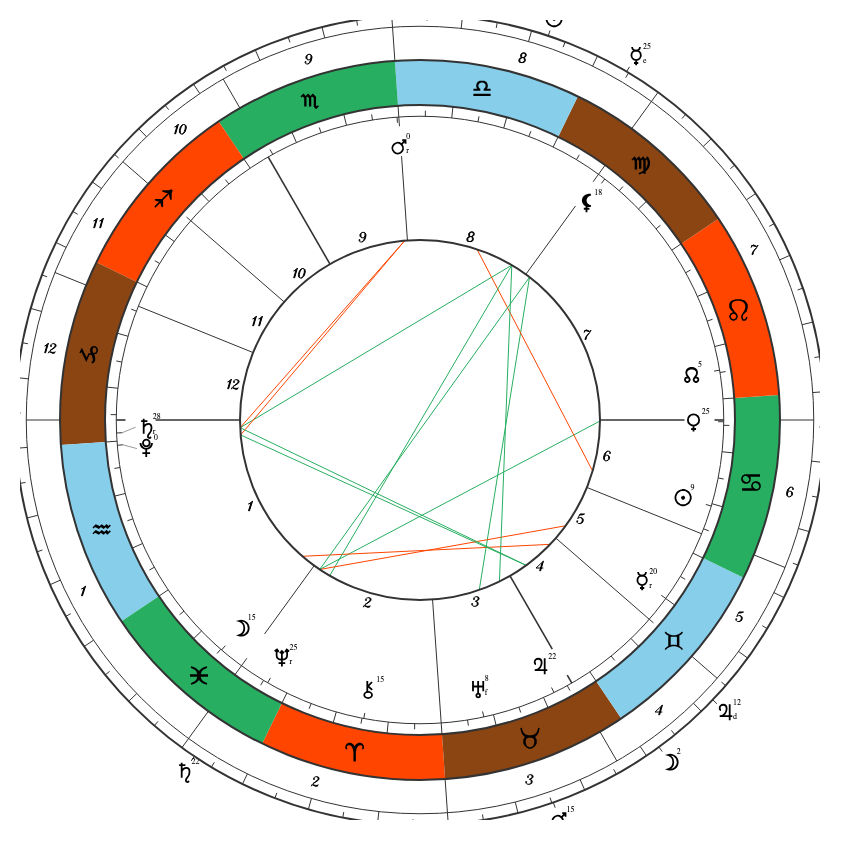
This is a natal + transit chart I rendered from your library with sample longitudes:
The demo link above lets anyone upload planet longitudes and house cusps and get a rendered chart wheel back -- no npm install, no local setup. Astrology students, app builders, or anyone comparing chart layouts can try it here and see what the library actually produces.
Every session leaves a usage record on the platform. Over time those records show which input shapes people actually try, where the rendering handles edge cases well, and where the output surprises them -- useful signal for tuning default settings, collision radius, or symbol scale.
Feel free to close if this isn't relevant.
shesonglin@tinkerland.ai
@AstroDraw
I cloned AstroChart, fed it a set of natal longitudes and house cusps, and got a clean transit wheel with aspect lines on the first call. The fact that the SVG renders entirely from raw degree arrays -- no ephemeris dependency, no server -- is a deliberate design choice most charting libraries skip.
This is a natal + transit chart I rendered from your library with sample longitudes:
The demo link above lets anyone upload planet longitudes and house cusps and get a rendered chart wheel back -- no npm install, no local setup. Astrology students, app builders, or anyone comparing chart layouts can try it here and see what the library actually produces.
Every session leaves a usage record on the platform. Over time those records show which input shapes people actually try, where the rendering handles edge cases well, and where the output surprises them -- useful signal for tuning default settings, collision radius, or symbol scale.
Feel free to close if this isn't relevant.
shesonglin@tinkerland.ai